CULTiVA: Curriculum learning in text mining and visual question answering
Project funded by UEFISCDI under grant number PN-III-P1-1.1-TE-2019-0235, according to contract TE72/2020.
Host institution: University of Bucharest
Host institution: University of Bucharest
-
Project Summary
Over the last few years, handcrafted models for various computer vision and text mining tasks have been replaced by deep learning models, due to the impressive accuracy of the latter ones. For example, convolutional neural networks achieve state-of-the-art performance in object recognition, semantic segmentation and related tasks. Neural networks are inspired by the human brain, but there are many aspects that are not captured by these models. One of the most important aspects is that humans usually learn concepts on a progressive basis, starting with the easy concepts first. As we pass through the educational stages in school, we learn more and more advanced concepts that require our previously gained knowledge for proper understanding. All schooling systems across the globe prove that humans learn better using a curriculum. Although deep models reach very high accuracy levels for various computer vision and text mining tasks, the main issue is that the examples are usually presented in a random order during training. Following our success in training generative adversarial networks using curriculum learning [1], the main goal of our project is to train state-of-the-art deep models for text mining and visual question answering using a curriculum learning paradigm, in which examples are presented gradually, from the easy ones to the most difficult ones. We expect to improve the accuracy and the training time. In oder to achieve our goal, we aim to investigate various curriculum learning strategies. We devised a plan composed of 5 tasks, which spans for 24 months. In order to complete our tasks, we gathered a team of 4 members (2 senior researchers and 2 PhD students), all under 40 years old. The senior researchers have a strong publication record with papers in conferences such as CVPR, ICCV, NeurIPS, ACL, ECCV, EMNLP, NAACL and journals such as IEEE Transactions on Pattern Analysis and Machine Intelligence and Computational Linguistics.
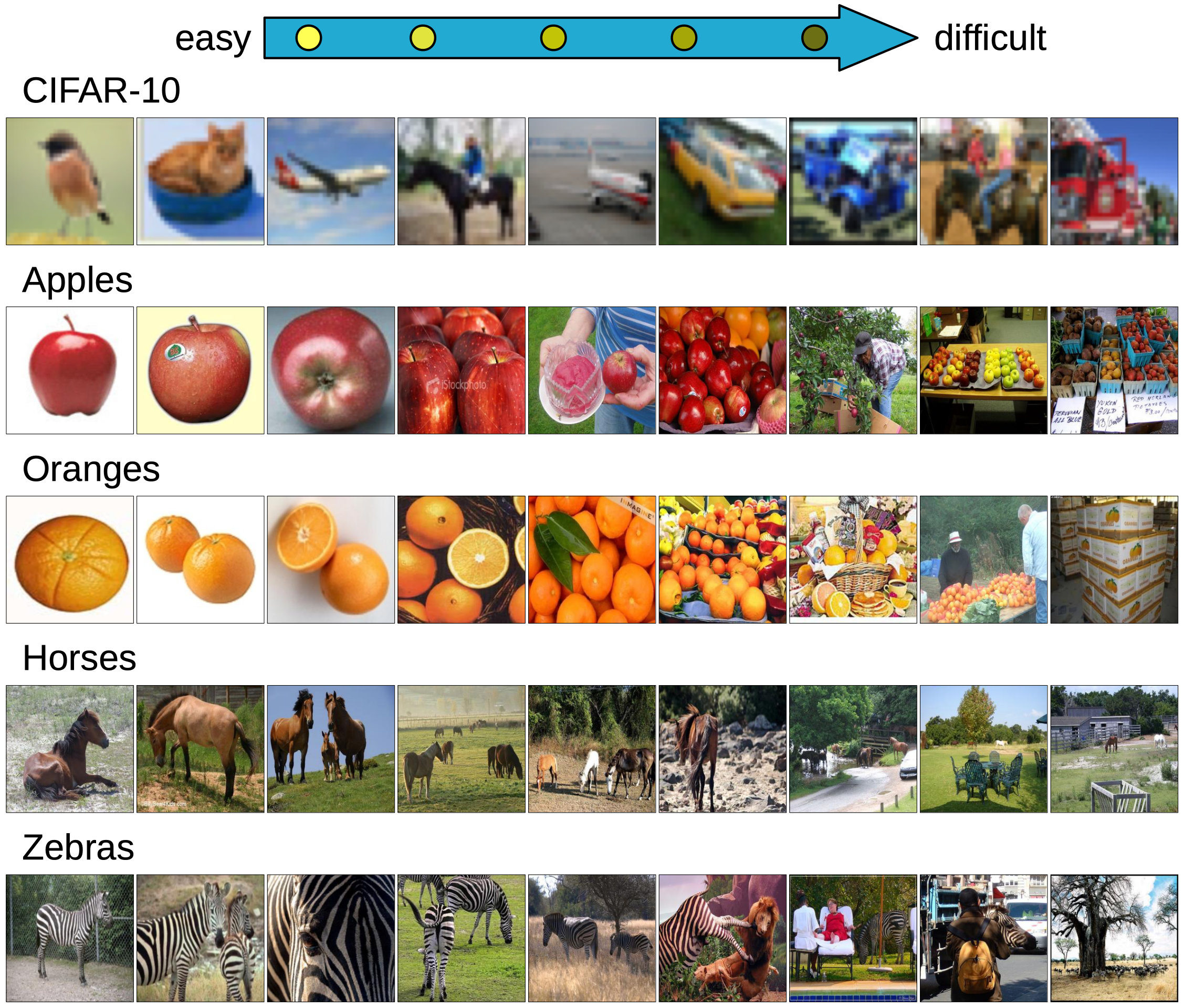
[1] Petru Soviany, Claudiu Ardei, Radu Tudor Ionescu, Marius Leordeanu. Image Difficulty Curriculum for Generative Adversarial Networks (CuGAN). In Proceedings of WACV, 2020.
-
Papers Funded through the CULTiVA Project
15. F.A. Croitoru, N.C. Ristea, R.T. Ionescu, N. Sebe. LeRaC: Learning Rate Curriculum. ArXiv, 2022. [ArXiv]
14. M. Găman, L. Ghadamiyan, R.T. Ionescu, M. Popescu. Self-paced learning to improve text row detection in historical documents with missing labels. In Proceedings of TiE (ECCV Workshop), 2022. (Rank A*/2 Workshop) [ArXiv]
13. N.C. Ristea, R.T. Ionescu, F.S. Khan. SepTr: Separable Transformer for Audio Spectrogram Processing. In Proceedings of INTERSPEECH, 2022. (Rank A Conference) [ArXiv]
12. P. Soviany, R.T. Ionescu, P. Rota, N. Sebe. Curriculum Learning: A Survey. International Journal of Computer Vision, 2022. (Q1 Journal) [ArXiv]
11. M.I. Georgescu, G. Duță, R.T. Ionescu. Teacher-Student Training and Triplet Loss to Reduce the Effect of Drastic Face Occlusion. Machine Vision and Applications, 2022. (Q2 Journal) [ArXiv]
10. M. Găman, R.T. Ionescu. The Unreasonable Effectiveness of Machine Learning in Moldavian versus Romanian Dialect Identification. International Journal of Intelligent Systems, 2022. (Q1 Journal) [ArXiv]
9. I.C. Duță, M.I. Georgescu, R.T. Ionescu. Contextual Convolutional Neural Networks. In Proceedings of NeurArch (ICCV Workshop), 2021. (Rank A*/2 Workshop) [ArXiv]
8. N.C. Ristea, R.T. Ionescu. Self-paced ensemble learning for speech and audio classification. In Proceedings of INTERSPEECH, 2021. (Rank A Conference) [ArXiv]
7. A.C. Rogoz, M. Găman, R.T. Ionescu. SaRoCo: Detecting Satire in a Novel Romanian Corpus of News Articles. In Proceedings of ACL, 2021. (Rank A* Conference) [ArXiv]
6. R.T. Ionescu, A.G. Chifu. FreSaDa: A French Satire Data Set for Cross-Domain Satire Detection. In Proceedings of IJCNN, 2021. (Rank B Conference) [ArXiv]
5. M. Găman, S. Cojocariu, R.T. Ionescu. UnibucKernel: Geolocating Swiss German Jodels Using Ensemble Learning. In Proceedings of VarDial (EACL Workshop), 2021. (Rank A/2 Workshop) [ArXiv]
4. A. Tache, M. Găman, R.T. Ionescu. Clustering Word Embeddings with Self-Organizing Maps. Application on LaRoSeDa - A Large Romanian Sentiment Data Set. In Proceedings of EACL, pp. 949–956, 2021. (Rank A Conference) [ArXiv]
3. P. Soviany, R.T. Ionescu, P. Rota, N. Sebe. Curriculum Self-Paced Learning for Cross-Domain Object Detection. Computer Vision and Image Understanding, 2021. (Q1 journal) [ArXiv]
2. A. Bărbălău, A. Cosma, R.T. Ionescu, M. Popescu. Black-Box Ripper: Copying black-box models using generative evolutionary algorithms. In Proceedings of NeurIPS, 2020. (Rank A* Conference) [ArXiv]
1. M. Găman, R.T. Ionescu. Combining Deep Learning and String Kernels for the Localization of Swiss German Tweets. In Proceedings of VarDial (COLING Workshop), 2020. (Rank A/2 Workshop) [ArXiv]
-
Open Source Code
6. Open Source Repository for the paper:
N.C. Ristea, R.T. Ionescu, F.S. Khan. SepTr: Separable Transformer for Audio Spectrogram Processing. In Proceedings of INTERSPEECH, 2022. [ArXiV]
5. Open Source Repository for the paper:
I.C. Duță, M.I. Georgescu, R.T. Ionescu. Contextual Convolutional Neural Networks. In Proceedings of NeurArch (ICCV Workshop), 2021. [ArXiV]
4. Open Source Repository for the paper:
A.C. Rogoz, M. Găman, R.T. Ionescu. SaRoCo: Detecting Satire in a Novel Romanian Corpus of News Articles. In Proceedings of ACL, 2021. [ArXiV]
3. Open Source Repository for the paper:
R.T. Ionescu, A.G. Chifu. FreSaDa: A French Satire Data Set for Cross-Domain Satire Detection. In Proceedings of IJCNN, 2021. [ArXiV]
2. Open Source Repository for the paper:
A. Tache, M. Găman, R.T. Ionescu. Clustering Word Embeddings with Self-Organizing Maps. Application on LaRoSeDa - A Large Romanian Sentiment Data Set. In Proceedings of EACL, pp. 949–956, 2021. [ArXiV]
1. Open Source Repository for the paper:
A. Bărbălău, A. Cosma, R.T. Ionescu, M. Popescu. Black-Box Ripper: Copying black-box models using generative evolutionary algorithms. In Proceedings of NeurIPS, 2020. [ArXiV]
-
Project Team Members

Radu Tudor Ionescu - Principal Investigator
Radu Tudor Ionescu is Professor at the University of Bucharest, Romania. He completed his PhD at the University of Bucharest in 2013. He received the 2014 Award for Outstanding Doctoral Research in the field of Computer Science from the Romanian Ad Astra Association. Radu is teaching Computer Science and Artificial Intelligence lectures at the University of Bucharest. His research interests include machine learning, computer vision, image processing, computational linguistics and medical imaging. He published over 100 articles at international peer-reviewed conferences and journals, and a research monograph with Springer. Radu Tudor Ionescu received the "Caianiello Best Young Paper Award" at ICIAP 2013 for the paper entitled "Kernels for Visual Words Histograms". In 2017, Radu received the "Young Researchers in Science and Engineering" Prize organized by prof. Rada Mihalcea for young Romanian researchers in all scientific fields. He was also awarded the "Danubius Young Scientist Award 2018 for Romania" by the Austrian Federal Ministry of Education, Science and Research and by the Institute for the Danube Region and Central Europe. Together with other co-authors, he obtained good rankings at several international competitions: 4th place in the Facial Expression Recognition Challenge of WREPL 2013, 3rd place in the NLI Shared Task of BEA-8 2013, 2nd place in the ADI Shared Task of VarDial 2016, 1st place in the ADI Shared Task of VarDial 2017, 1st place in the NLI Shared Task of BEA-12 2017, 1st place in the ADI Shared Task of VarDial 2018.
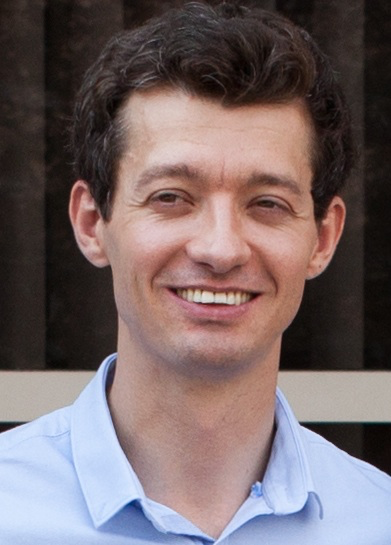
Bogdan Alexe - Senior Researcher
Bogdan Alexe is an associate professor at University of Bucharest, teaching lectures on Artificial Intelligence, Machine learning and Computer Vision. He received the PhD title from ETH Zurich (2013) with a thesis in the computer vision field. He is the author of more than 10 papers in top conferences and journals in computer vision and machine learning. His Google Scholar profile shows more than 3000 citations and a Hirsch-index of 11. His research interests include machine learning and pattern recognition in computer vision, e.g. object classification, detection and recognition, but also data mining and optimization methods with applications in natural language processing.

Antonio Bărbălău - PhD Student
Antonio Barbalau is a PhD student at the University of Bucharest, Romania. His research focuses on leveraging Genetic Algorithms in order to improve and expand deep learning methods. In his first year as a PhD, he published two papers on the subject, both of which have been accepted at prestigious conferences. The paper "Black-Box Ripper: Copying black-box models using generative evolutionary algorithms" has been accepted for oral presentation at NeurIPS 2020, while the paper "A Generic and Model-Agnostic Exemplar Synthetization Framework for Explainable AI" has been accepted at ECML-PKDD 2020. Antonio is teaching Artificial Intelligence for undergraduate students and Machine Learning and Deep Learning at the AI Masters of the University of Bucharest, for the past three years.
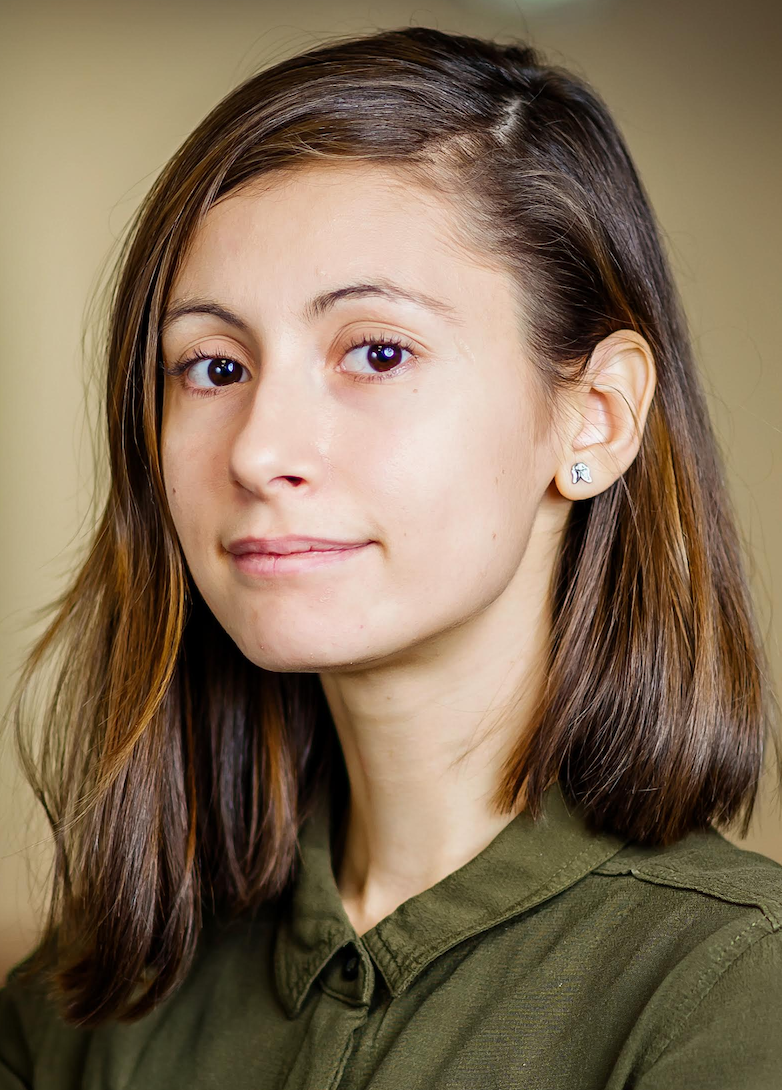
Mihaela Găman - PhD Student
Mihaela Găman is a data scientist working in cybersecurity, with previous work experience as an embedded software engineer in various domains such as automotive, networking and transportation. On the academic side, Mihaela is a PhD student at the University of Bucharest, with research interest in computational linguistics, machine learning in general, with focus on deep learning and its applicability in various natural language processing tasks. Among the NLP tasks targeted by Mihaela are: style transfer in text, sentiment analysis, dialect identification and text simplification. Mihaela has published two scientific works, one of which was accepted at ACL 2019 (Rank A* Conference).
-
Reports
1. Activity report for 2020 (Romanian version).
2. Activity report for 2021 (Romanian version).
3. Activity report for 2022 (Romanian version).